PRISM - Preservation & Research through Innovative Sample Management
The project PRISM aims to inventory, document, and digitally valorise heritage sample collections. By applying FAIR principles and a modern digital infrastructure, the data will become accessible, interoperable, and reusable for research, conservation, and public valorisation.

The project is funded under the P4Science programme of BELSPO.

A project to better understand and valorise unique collections
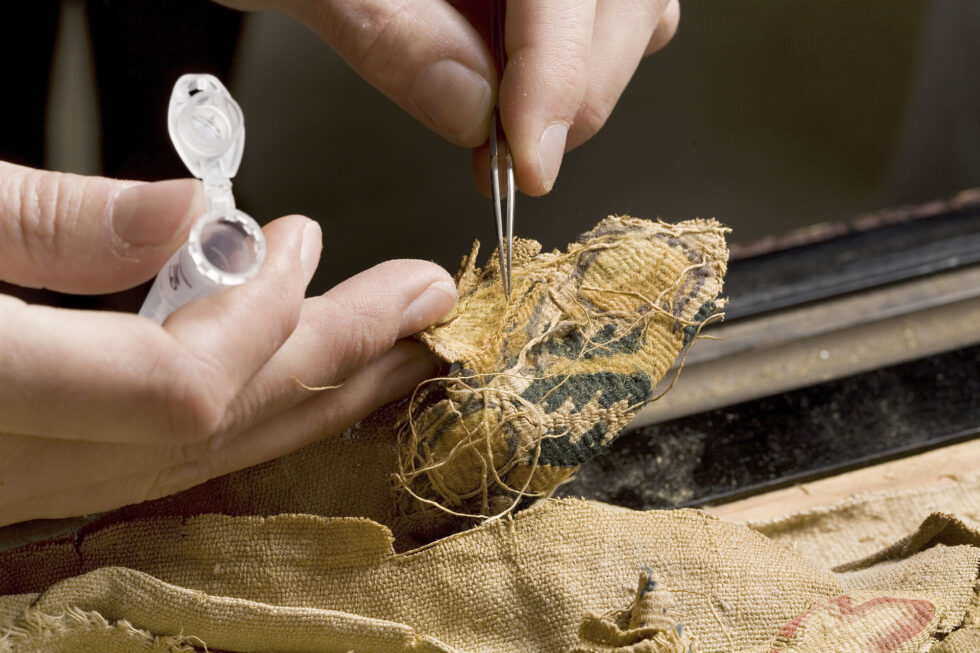
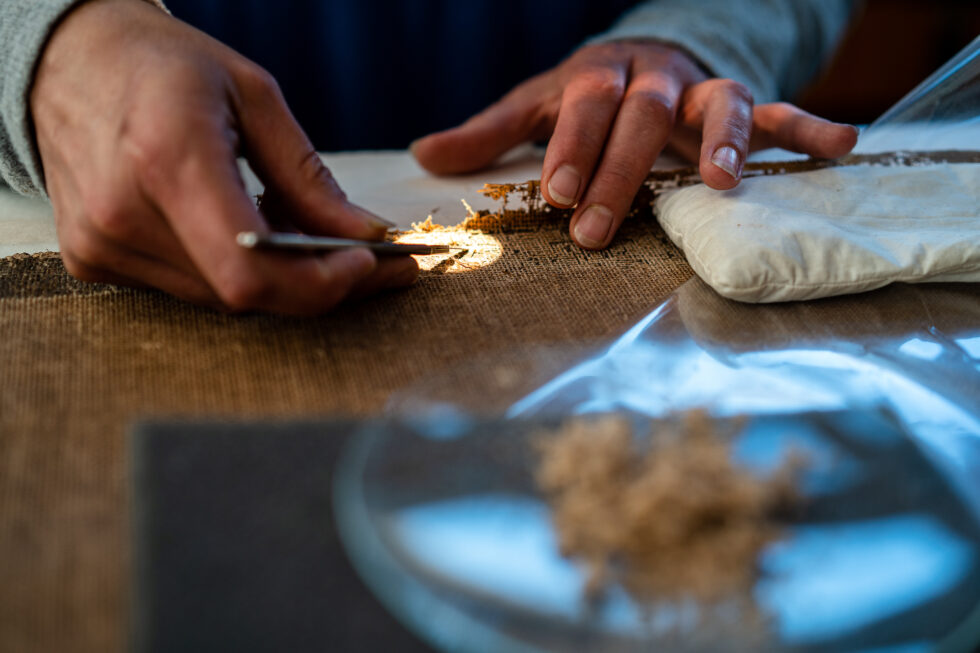
PRISM aims to improve knowledge, management, and accessibility of KIK-IRPA’s heritage sample collections. These collections are irreplaceable scientific resources for the study and conservation of heritage. They provide unique material evidence, essential for understanding the composition, degradation, and history of heritage objects. Their value is particularly high for fragile objects where invasive sampling is undesirable, or for objects that no longer exist. Samples therefore constitute irreplaceable physical representations for ongoing and future research.
The collections include different types of samples:
- Heritage samples: deliberately taken from objects or artefacts for analytical purposes
- Reference materials: used in artistic creation, such as natural stones from quarries, or pure materials (pigments, drying oils, plastics) for developing spectral libraries
- Mock-ups: samples created to simulate techniques, ageing processes, or material interactions
Despite their importance, the potential of these collections remains limited due to fragmented documentation and restricted access. PRISM aims to structure, document, and valorise these collections to facilitate scientific and heritage use while minimising destructive sampling.
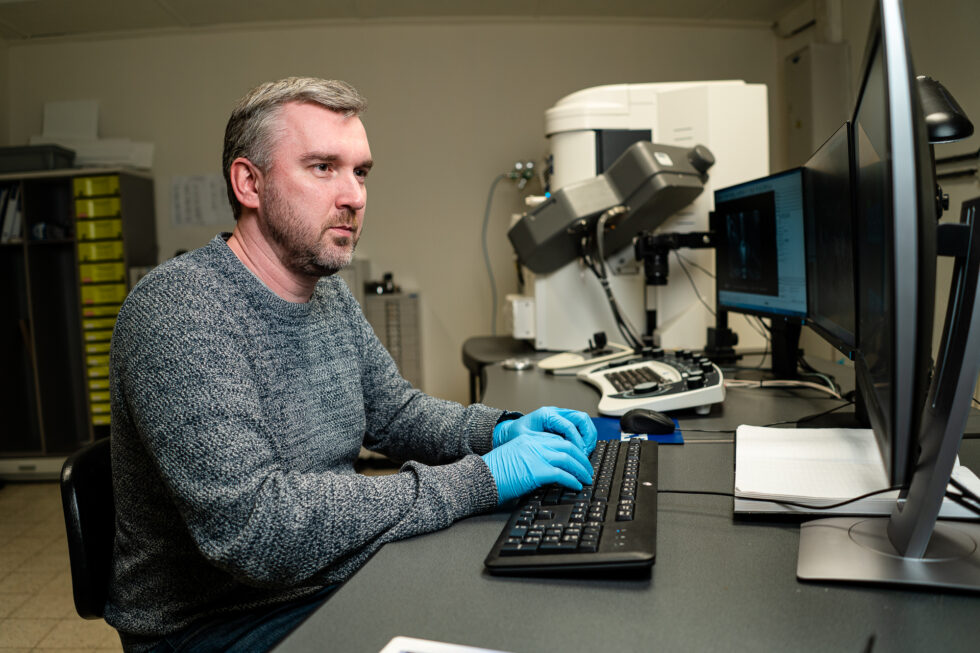
Towards structured management and FAIR data
To address these challenges, PRISM implements a global strategy to inventory, document, manage, and digitally valorise these collections according to international FAIR principles (Findable, Accessible, Interoperable, Reusable) and international best practices.
The project begins with a complete inventory of the samples, reference materials, and mock-ups preserved at KIK-IRPA, to structure knowledge and improve their use.
Two pilot collections at the heart of the project
A digital management and documentation framework is applied to two major pilot collections, representative of the richness and diversity of the samples preserved at KIK-IRPA.
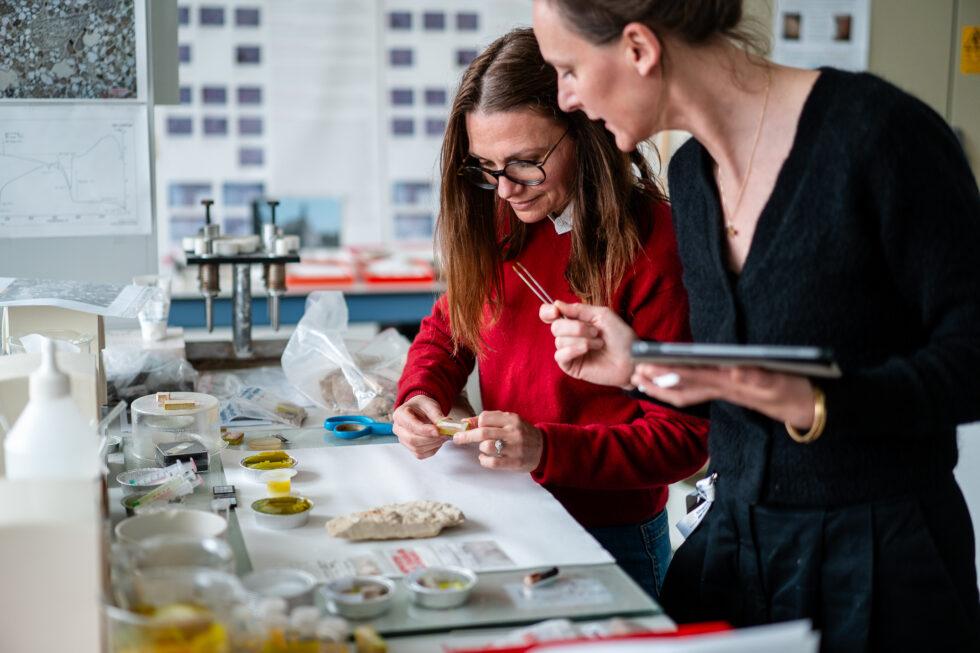
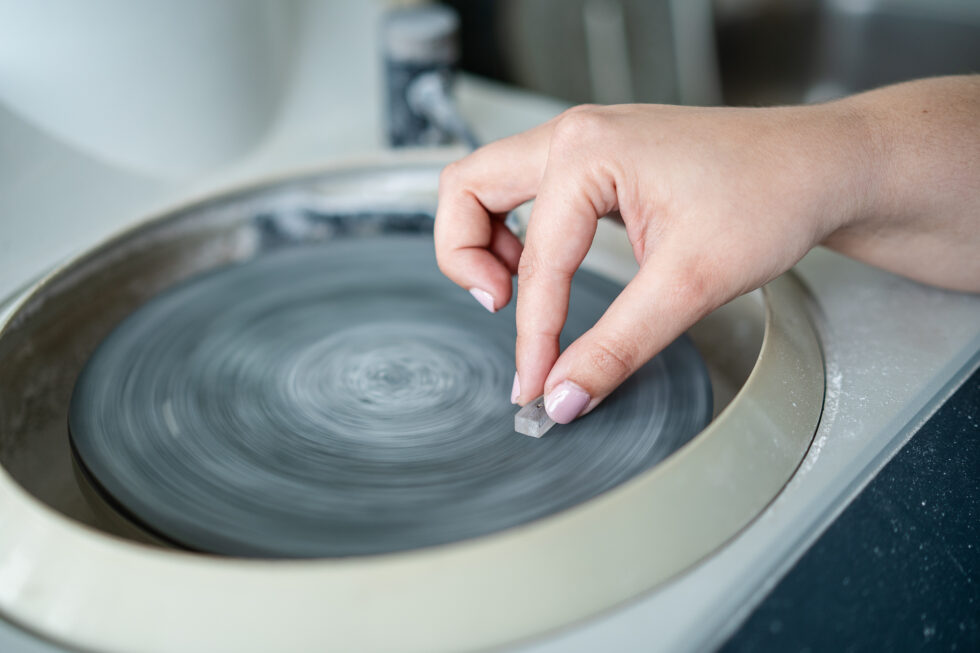
The first collection includes over 2.600 stone and related material samples (natural stone, mortar, plaster, brick…), mainly from Belgian historic monuments. Unique in its scale in Belgium, this collection covers a wide range of materials, architectural functions, and periods, from the Neolithic to today. Some samples, from listed sites or major works, are sometimes the last witnesses of materials now lost and constitute essential references for conservation.
Additionally, a collection of over 250 samples is preserved at the Geological Survey of Belgium of the Royal Belgian Institute of Natural Sciences, mainly consisting of historical building stones, further enhancing the scope of the ensemble.
The second collection comprises more than 40.000 paint samples, collected since the 1940s from a wide variety of heritage objects (easel paintings, polychrome sculptures, murals, and interior decorations). It provides a unique insight into the condition of the works at the time of sampling and is a valuable resource for research and conservation, allowing materials to be re-analysed without additional sampling.
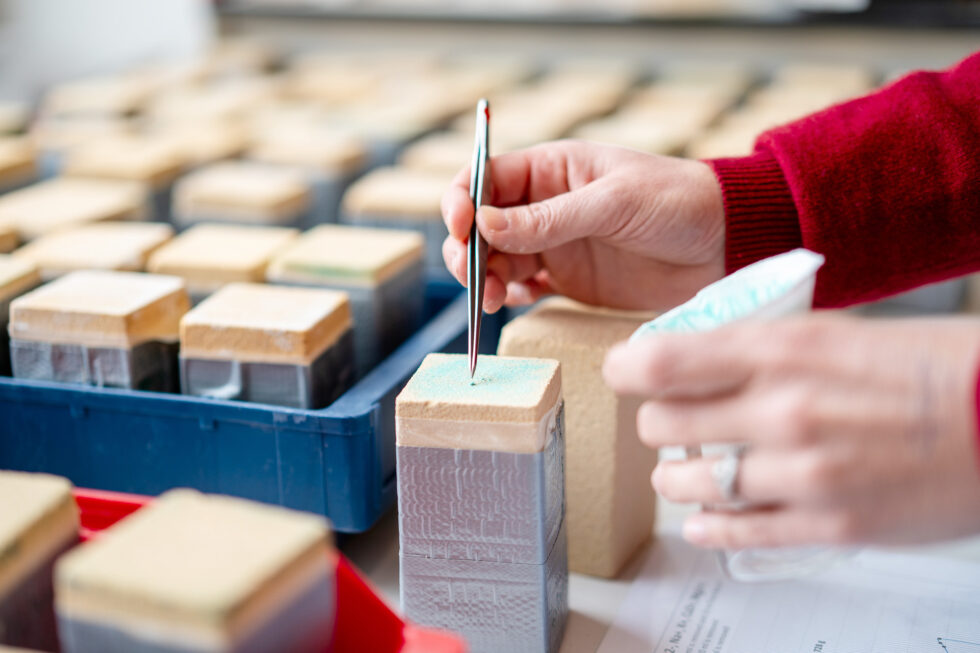
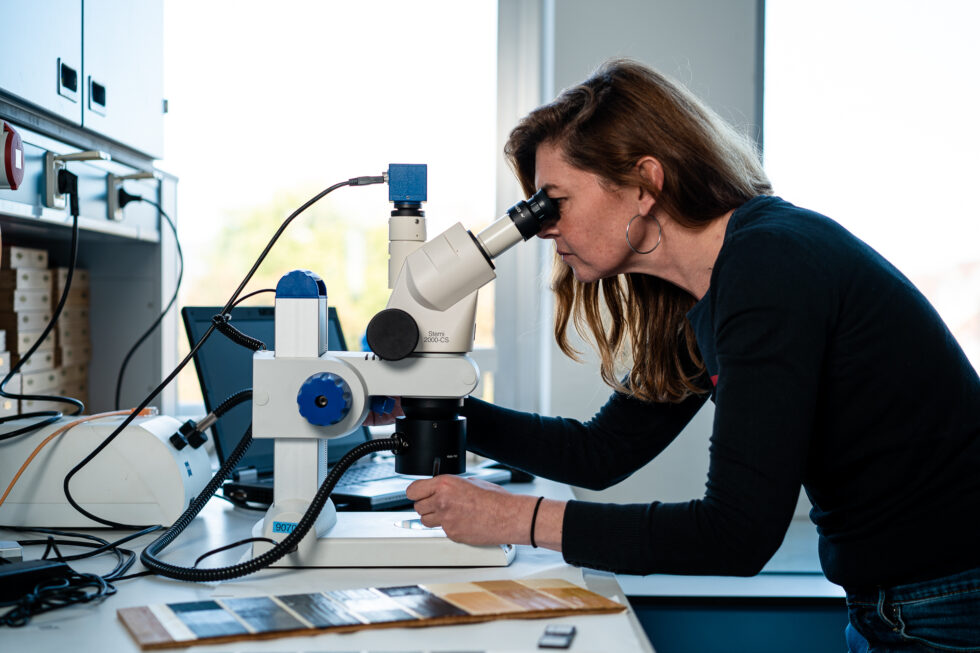
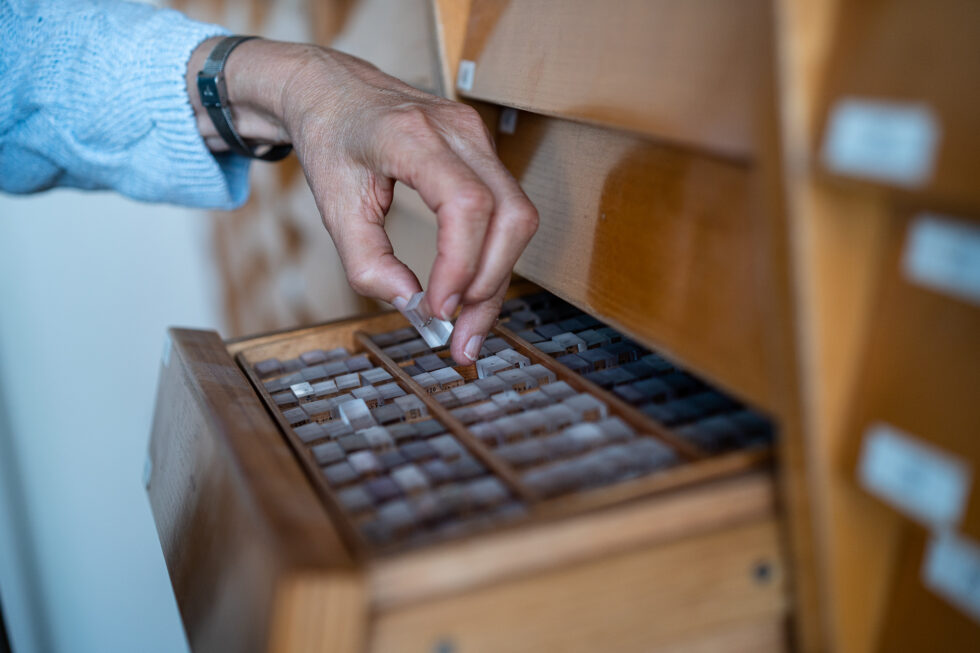





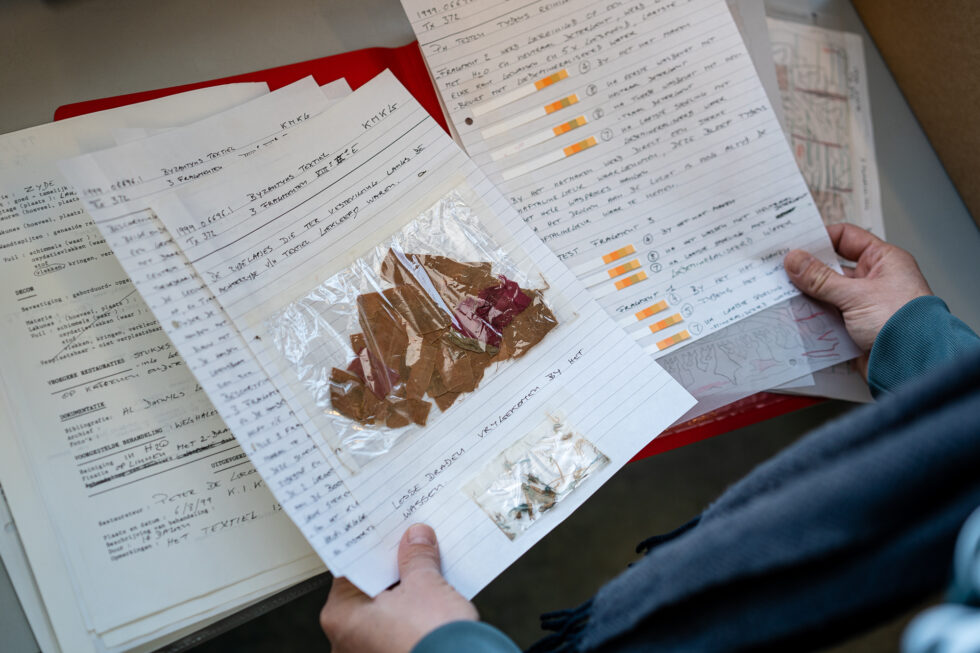
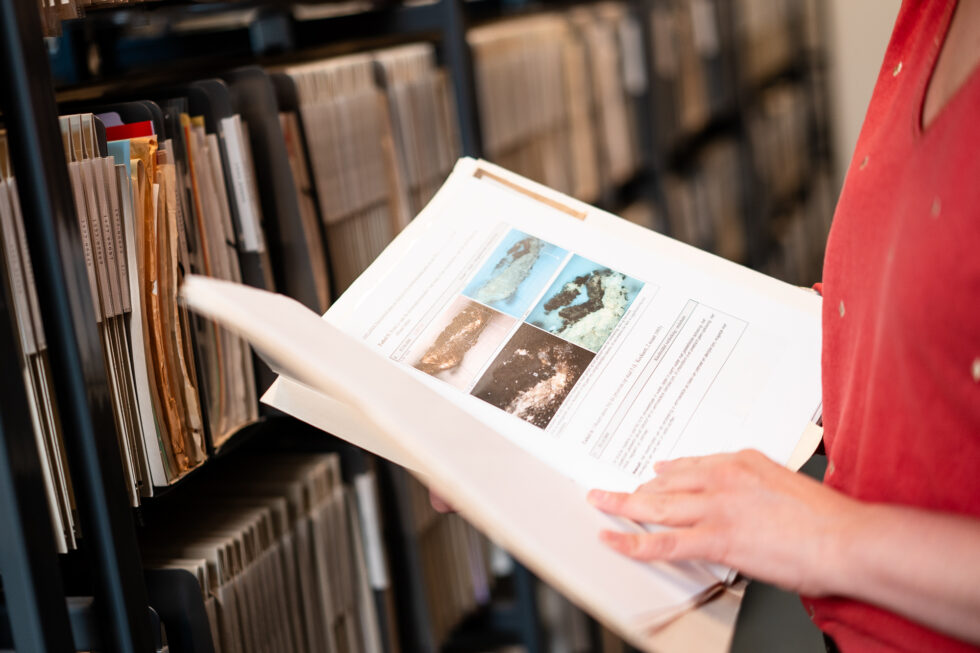
The project includes digitisation of existing paper archives, aggregation and structuring of documentation, assessment of conservation conditions according to ICCROM recommendations (Heritage Samples Archives. A Guide for Management, 2025), and structuring and integration of the data into the Cordra digital repository using interoperable metadata schemas.
Digital tools for exploring the collections
Concrete outputs include the online publication of representative subsets of at least 1.000 samples per pilot collection, implementation of IIIF-compliant image management (International Image Interoperability Framework), and the development of a dedicated online search tool enabling advanced queries, including geolocation.
These subsets are selected from the full collections according to scientific, documentary, and heritage criteria, to best reflect their diversity and importance. Special attention is paid to the quality of existing documentation, the availability of images (including microscopic), and the historical or artistic value of the objects from which the samples originate.
The associated data, images, and analytical results are then structured and integrated into the Cordra digital repository, linked to IIIF services, following interoperable metadata schemas. This process creates rich, interconnected datasets, providing a complete and contextualised digital representation of the samples. Documentation is also archived following long-term preservation workflows.
An action plan will also prepare the future integration of these data into the BALaT database, while some collections will be registered or updated in ICCROM’s International Heritage Sample Archive registry to increase visibility.
Dissemination of research results
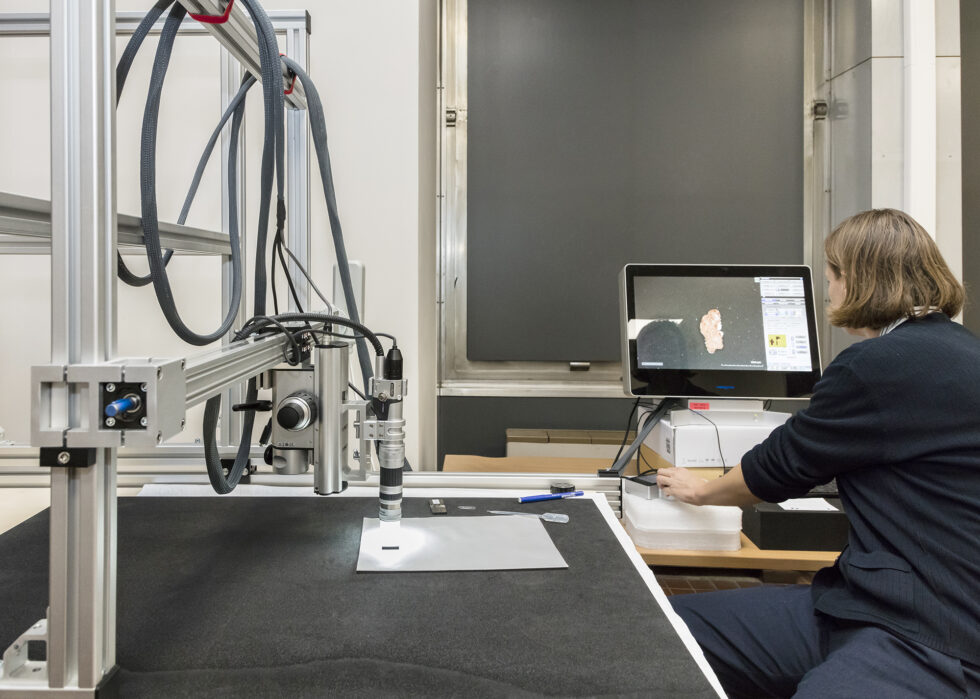
The project also includes a data management plan, monitoring of legal and security aspects, and a programme for dissemination and training targeting researchers, heritage professionals, and educational institutions, including workshops, educational resources, and scientific publications.
A lasting impact for research and conservation
PRISM will deliver a structured inventory of KIK-IRPA’s sample collections, documented digital datasets, and a reproducible management framework, facilitating integration into European research infrastructures such as E-RIHS (European Research Infrastructure for Heritage Science) and ECHOES (European Cloud for Heritage OpEn Science).
The project will thus strengthen research, conservation, and the international visibility of these unique collections, while ensuring their long-term preservation and reuse.

Annelies Cosaert, Ann Oosvogels, Wim Fremout (coord.), Julie Mauro, Laurent Fontaine, Elisabeth Van Eyck,
Stephanie Buyle, Edwin De Roock, Marleen De Ceukelaire (KBIN), Cécile Glaude, Elodie De Zutter, (Marjolijn Bijloos)

FUSION – Film Understanding through Spectroscopy and Intelligent Optical Notch recognition
How can we improve the identification of old photographic films to better prevent their deterioration?
