The restoration of the Ghent Altarpiece explained to the public
Belgian television channel VRT recently published a news report on the final phase of the restoration of the Van Eyck brothers' iconic painting, the Ghent Altarpiece. This 15th-century masterpiece is currently being restored by a team of seven conservator-restorers from KIK-IRPA. The report, entitled "Hoe staat het met de restauratie van Het Lam Gods, na alle commotie?" (How is the restoration of the Mystic Lamb proceeding, following the controversy?), highlights the challenges and progress made in this complex project.
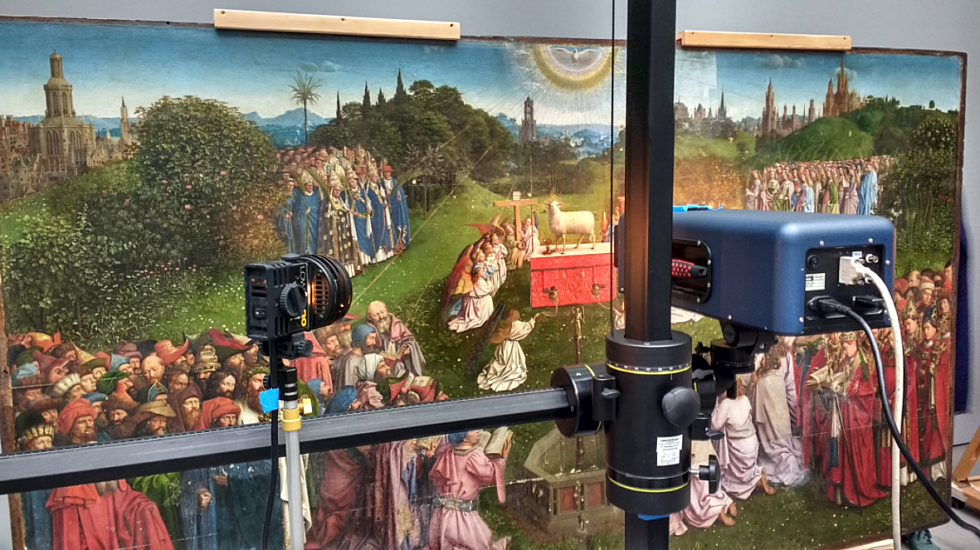
Unfounded allegations
Last May, the team began the third and final phase of the restoration project. The second phase however, which was completed at the end of 2019, was criticised at the end of 2023, sparking a lively public debate. Allegations were made, claiming that the conservator-restorers were inflicting irreparable damage on the masterpiece.
These claims, which had no scientific basis, were quickly dispelled by national and international experts, as well as by the Flemish government. They all emphasized the meticulousness and care that had gone into the project, as well as the scientific research that had preceded the interventions, and supported the restoration.
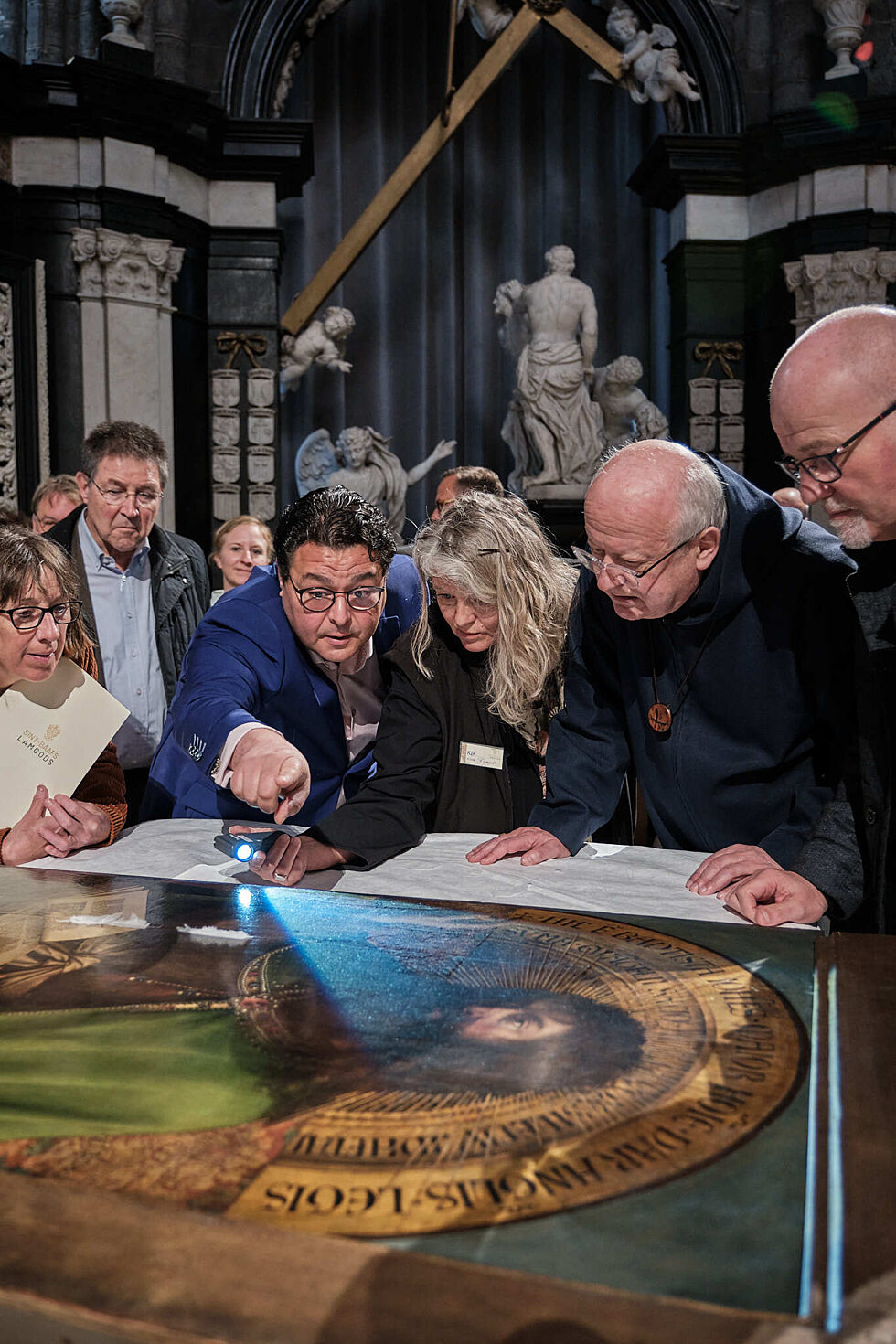
The project leader, Dr Hélène Dubois, responded to the criticism, affirming the support of various authorities, including the church council, the Flemish government and international experts. The team is not operating on its own, as each stage of the restoration is followed closely by a commission of international experts and a national advisory committee, who advise the church council and the Flemish authorities, the commissioners of the restoration, on the decisions to be taken.
A meticulous job
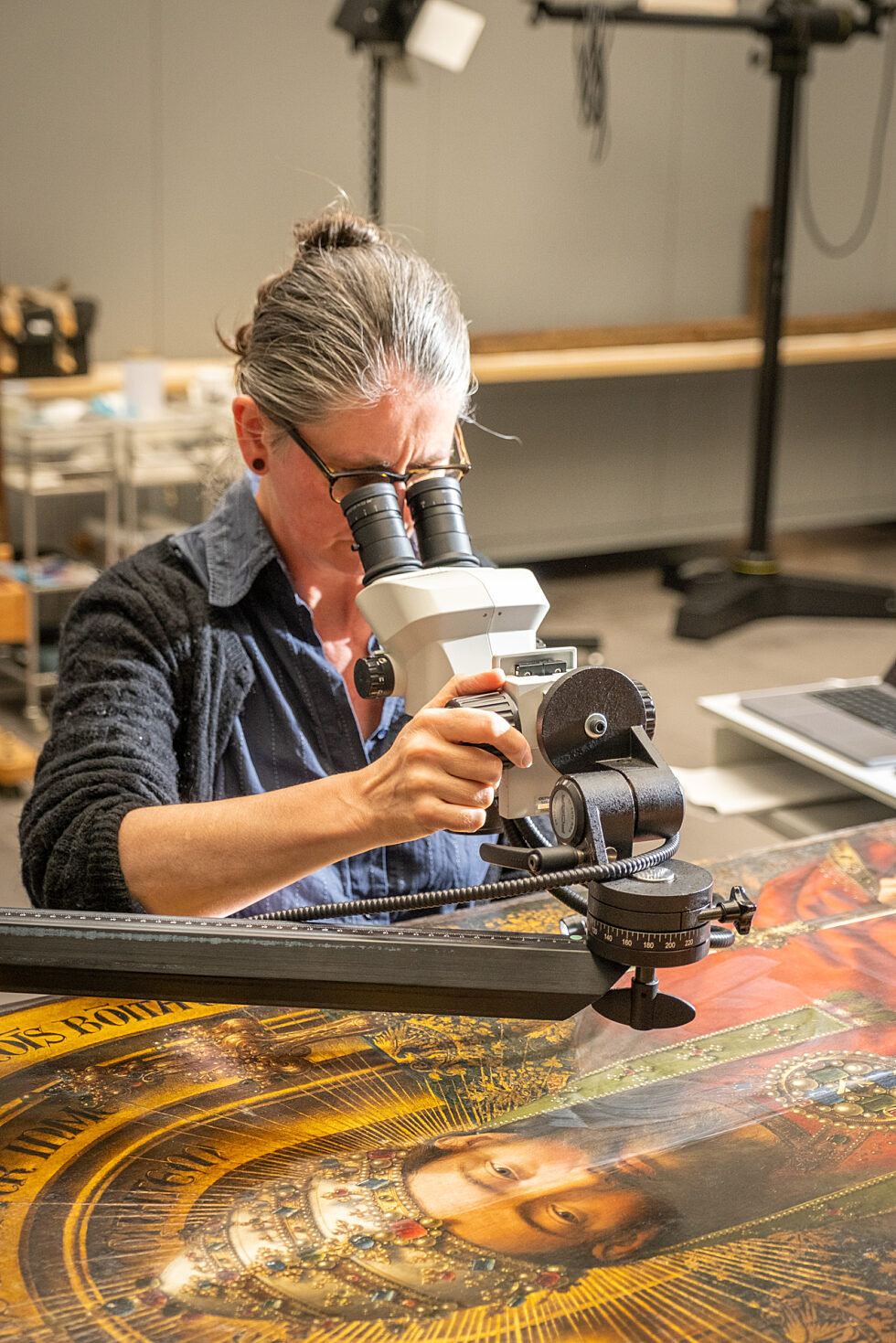
The conservator-restorers are currently working on the seven upper panels of the altarpiece, including the enthroned central figures, the singing and music-making angels, and the Adam and Eve panels. The team has removed strongly discoloured layers of varnish, hereby revealing the original colours and enabling a more in-depth study of the original paint layers and the overpaints.
Large overpaintings were found on the cloaks of the central figures. These additions conform to the 16th-century overpaints that were removed during phases 1 and 2, on the other panels of the altarpiece. Kathleen Froyen, one of the restorers, confirms that these layers are unquestionably overpaintings and not original paint layers by the Van Eyck brothers.
Adam
Removal of varnishes


Angels singing
Removal of varnishes


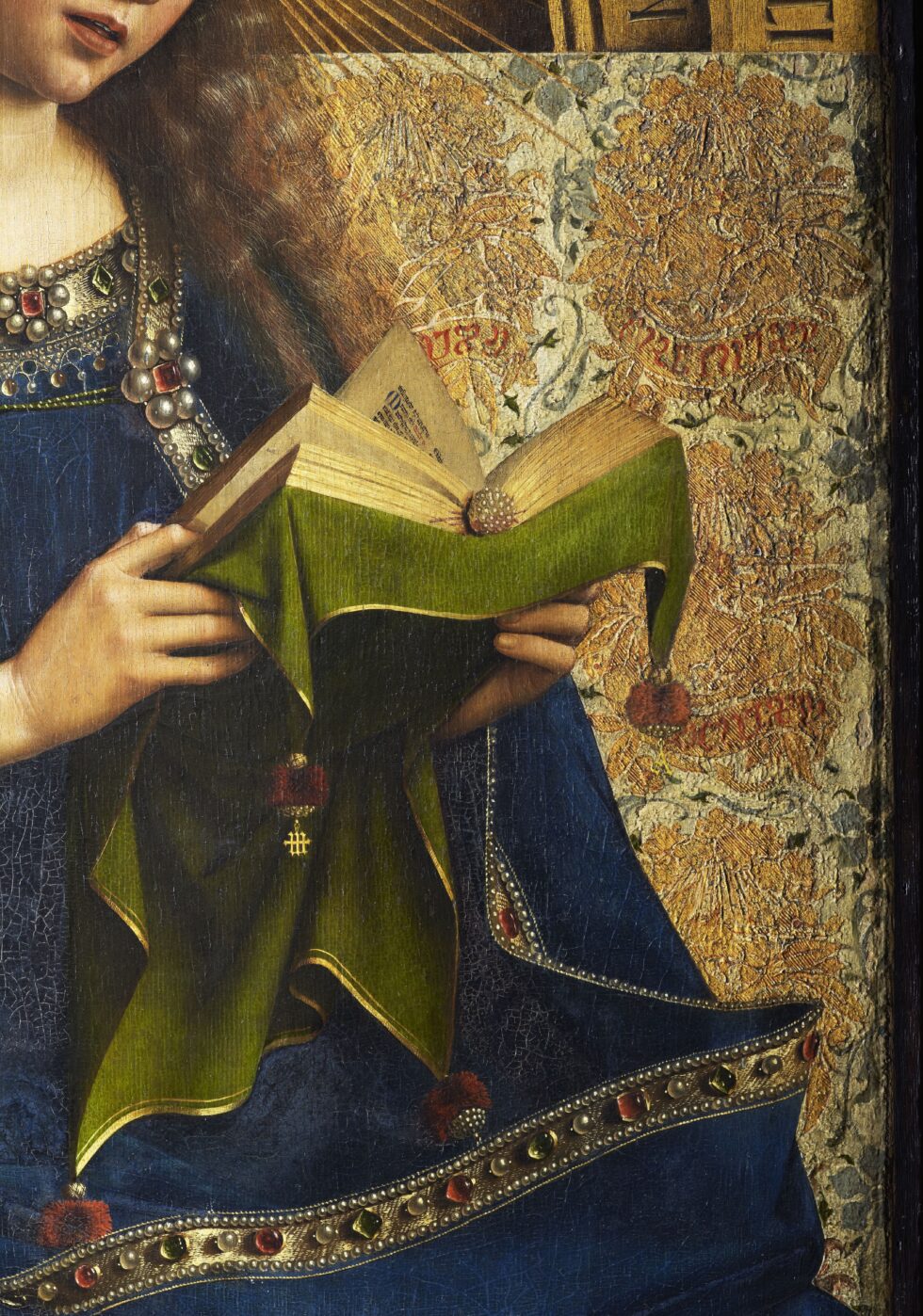
Asides from the usual challenges, the team has another particularly complex task: restoring the press brocades. This medieval technique, which involved the use of gilded tin foil,was used by the Van Eyck brothers to imitate richly decorated fabrics. Their restoration was entrusted to KIK-IRPA's expert in the field, Ingrid Geelen. She discusses the treatment in the report on the VRT NWS website.
Would you like to see the restoration with your own eyes? Then be sure to visit the Museum of Fine Arts (MSK) in Ghent, where you can see the restorers at work on this complex and impressive project.

-
Project
The mystery of Hubert van Eyck and the Ghent Altarpiece solved ‒ Interdisciplinary study of the research data of the second restoration phase
Discover this projectIn collaboration with the University of Antwerp, our interdisciplinary team conducted an in-depth study of the evidence gathered during the restoration of the lower register of the opened Ghent Altarpiece (2016-2019). They succeeded in uncovering one of the greatest mysteries in art history: the precise contribution of Jan Van Eyck and his illustrious older brother Hubert Van Eyck to the creation of the Ghent Altarpiece.


More KIK-IRPA news


CARVES: Sampling of the Ivory Panels for DNA and Isotope Analysis
Update August 2026