RE-ORG Belgium
RE-ORG Belgium helps museums turn overcrowded, chaotic storage into accessible, well-managed spaces where collections can truly thrive. Led by KIK-IRPA and based on the international RE-ORG Method (ICCROM, CCI, UNESCO), these year-long trainings builds skills to reorganise storage, assess conditions, support peers, and advocate for better care nationwide.


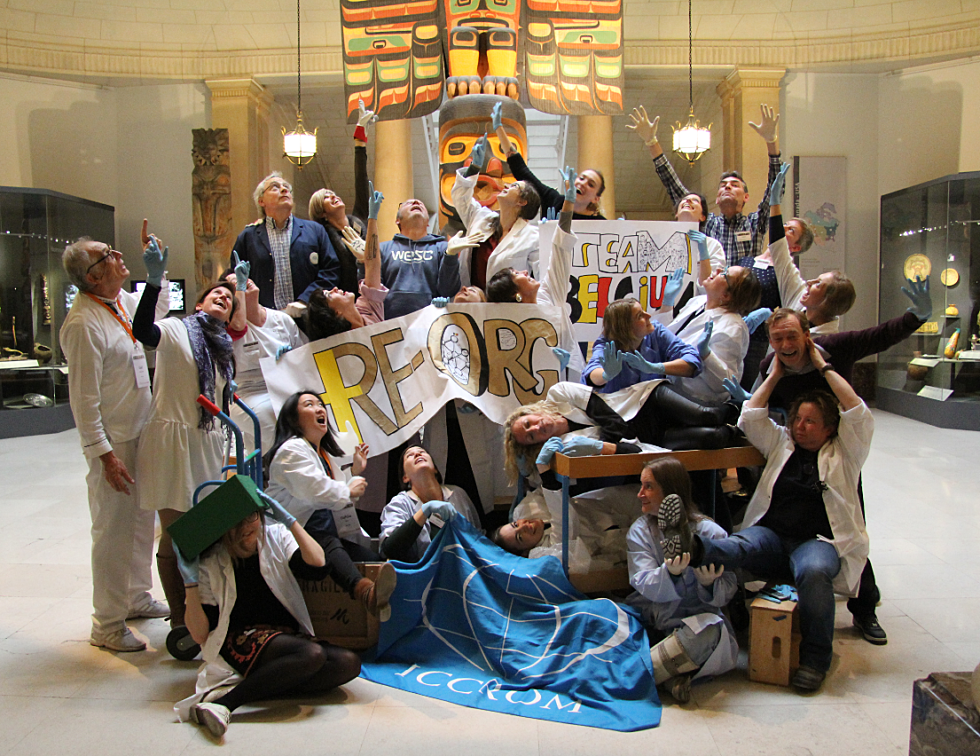
RE-ORG Belgium is a national programme led by the Royal Institute for Cultural Heritage (KIK-IRPA) to help Belgian museums reorganise their storage spaces. Around the world, billions of artworks remain in storage. A 2011 ICCROM–UNESCO survey revealed that this hidden heritage is often at serious risk. In Belgium, as elsewhere, chronic shortages of financial and human resources mean storage improvement is rarely a priority. To tackle this challenge, KIK-IRPA launched RE-ORG Belgium in 2015, in partnership with ICCROM, applying the step-by-step RE-ORG Method. Since then, 15 museums across Brussels, Flanders, and Wallonia have transformed their storage, making collections accessible again to staff and the public.

Essential readings
RE-ORG is a global initiative led by ICCROM in partnership with 14 international organisations, including KIK-IRPA. The RE-ORG methodology and tools are freely available online in French, Dutch, and English on the ICCROM resources page.
Related projects
SHARE-ORG – Discover Stories, Connect Communities! was the first global RE-ORG competition, held in 2019-2020. Museum collections, built up over decades or even centuries, are deeply connected to their local context – be it a city, region, or province – and carry meaning for the communities they serve. SHARE-ORG encouraged RE-ORG museums worldwide to unlock the potential of their stored collections, developing innovative projects and activities that brought these hidden treasures to the public.
This international initiative was coordinated by KIK-IRPA, in partnership with:
-
Central Institute for Conservation (CIK), Belgrade
The project was funded by the Belgian Science Policy Office (BELSPO).
