Rescuing and revaluing textile heritage through CHrisis
The Textiles Studio of KIK-IRPA worked on two subprojects within the CHrisis project, which was initiated following the 2021 floods in Wallonia.
The first project focused on investigating the effects of first aid actions on the long-term preservation and conservation treatment of water-damaged textile heritage. The second research project centered on assessing the value and significance of liturgical textiles.
Water as both enemy and teacher
The first project aimed to investigate the effects of first aid actions on the subsequent recovery and preservation of textiles damaged by water. This exploration yielded a wealth of insights and experiences.
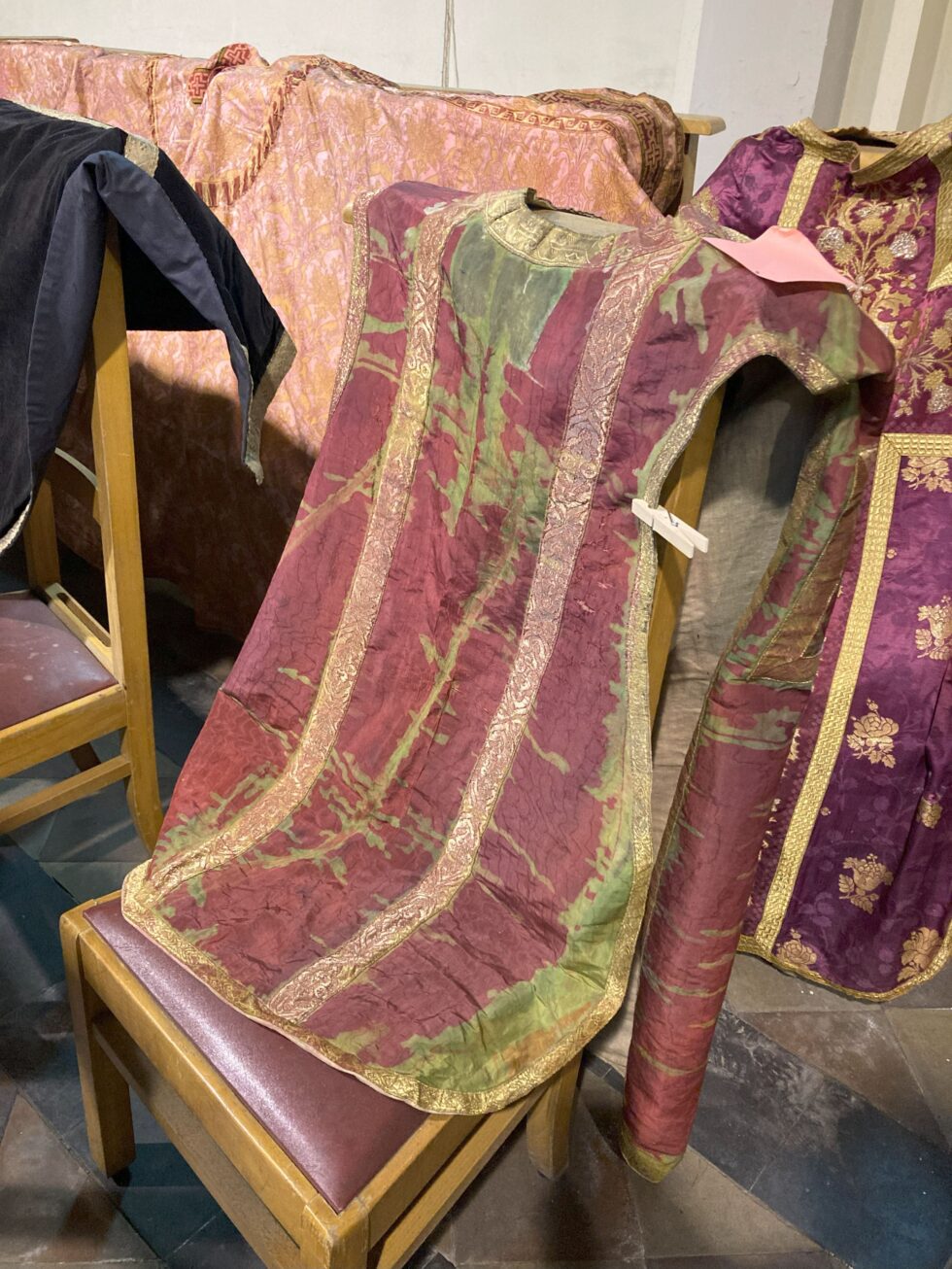
The Textiles Studio at KIK-IRPA frequently handles heritage objects affected by moisture or water damage. Sometimes, this damage results from internal causes, such as leaks within (museum) buildings. At other times, natural disasters are to blame, such as the devastating floods of July 2021. The damage to religious textiles caused by these floods inspired the CHrisis project.
-
Project
CHrisis: Protecting Heritage in Crisis Situations
Discover this projectWhen, heavy flooding in July 2021 impacted more than 250 heritage sites, the KIK-IRPA, in close cooperation with the relevant regional organisations, has coordinated a cross-sectoral response. In follow-up, the Cultural Heritage in Crisis (CHrisis) project works on recovery actions as well as on improving risk preparedness and management for the affected sites.


Flood damage to textiles involves many factors: damage patterns, conservation options, and the storage or further protection of affected objects. The conservation of water-damaged textiles is complex and challenging, and as part of the CHrisis project the Textiles Studio mapped out these processes in detail. This research connects first aid for water damage with specific degradation phenomena, treatment options, and the ethical considerations and goals of conservation. The experiences of KIK-IRPA’s textile conservators now serve as an example—or even a guide—for similar situations in the future.
"Saving heritage items is not just about their physical condition but also about their value and meaning for future generations."
Protecting and understanding liturgical textiles
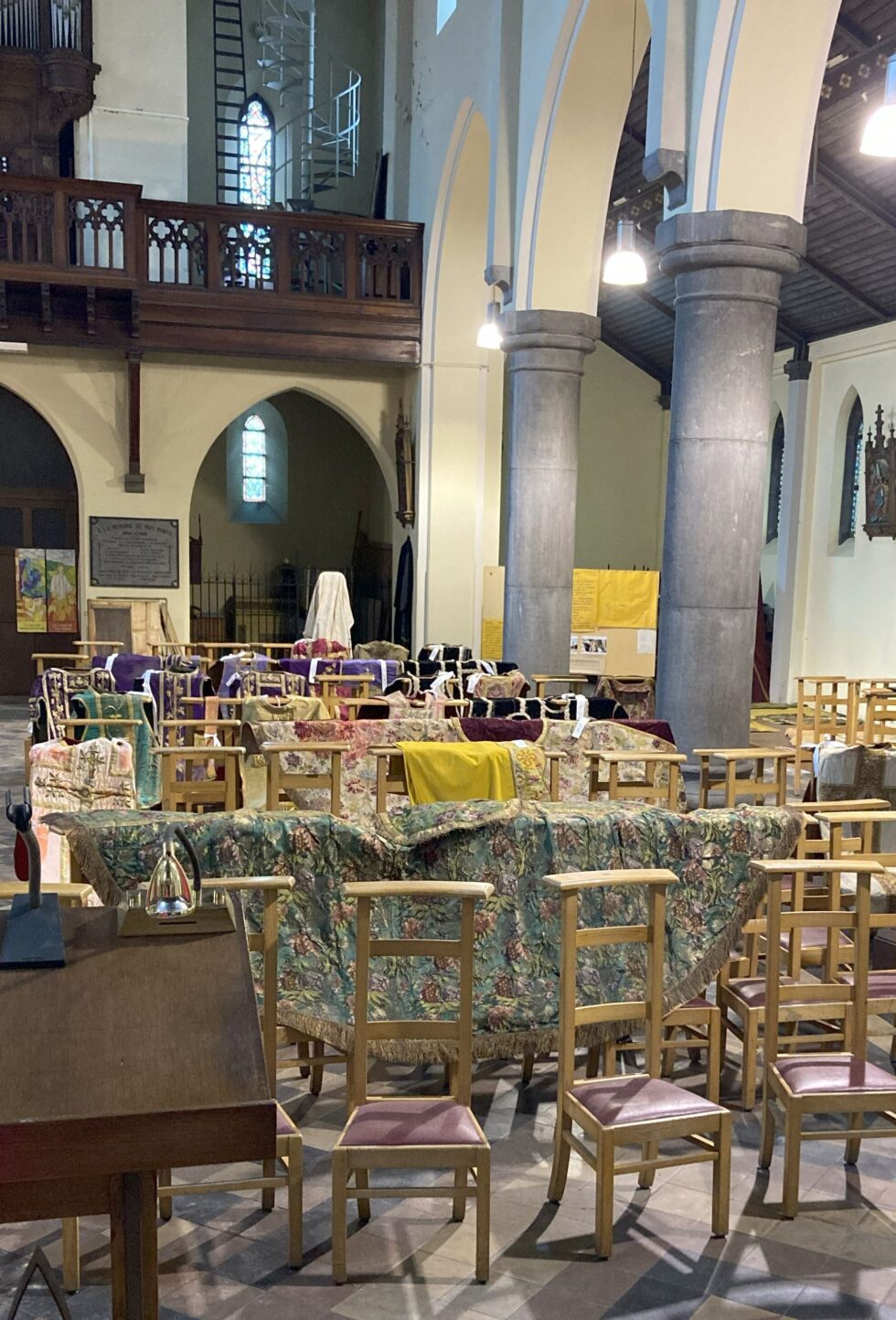
The 2021 floods also highlighted the vulnerability of liturgical textiles. This led to a second project focused on assessing the value and significance of this heritage. However, the risks to religious textiles extend beyond acute disasters.
In many sacristies, valuable liturgical textiles are stored: richly embroidered vestments, garments made from centuries-old silks, Italian silk velvets, linens, damasks, lace... Unfortunately, their heritage value is often underestimated or even unknown. Additionally, the storage conditions for these unique objects are often less than ideal. Many of these textile pieces have fallen into disuse and are tucked away in drawers, boxes, storage rooms, or attics. The loss of their function and meaning, coupled with the gradual disappearance of knowledge about them, poses a significant threat to this historic heritage. Moreover, the care for this heritage is increasingly under pressure. Volunteers or small communities often lack the resources or expertise to properly preserve these textiles.
For this project on value and significance assessment, KIK-IRPA worked closely with the Walloon CIPAR (Centre Interdiocésain du Patrimoine et des Arts Religieux), diocesan heritage services, and liturgical textiles collection managers. Using case studies, literature research, and knowledge-sharing with other textile experts, the project developed tools to assess the (art) historical value of religious textiles. This initiative provides a solid foundation for future heritage valuation projects. A participatory approach is key to success, as involving heritage professionals, local managers, and stakeholders creates support for the preservation of liturgical textiles. For specialized research, valuation teams can always rely on the expertise of KIK-IRPA’s Textiles Studio.

Collaboration as the key to preservation
These projects underline the importance of collaboration and community involvement in heritage preservation. Without the swift response of local communities during the floods, much religious heritage would likely have been lost. Alongside emergency aid, a better understanding of the value of this heritage is vital. Saving heritage items is not just about their physical condition but also about their significance for future generations.
More KIK-IRPA news


CARVES: Sampling of the Ivory Panels for DNA and Isotope Analysis
Update August 2026