CARVES: The long journey from tusk to museum
CARVES - Context And Reuse – the Valued Experience of Sustainability
A BELSPO Policy for Science Project
Louise Decq
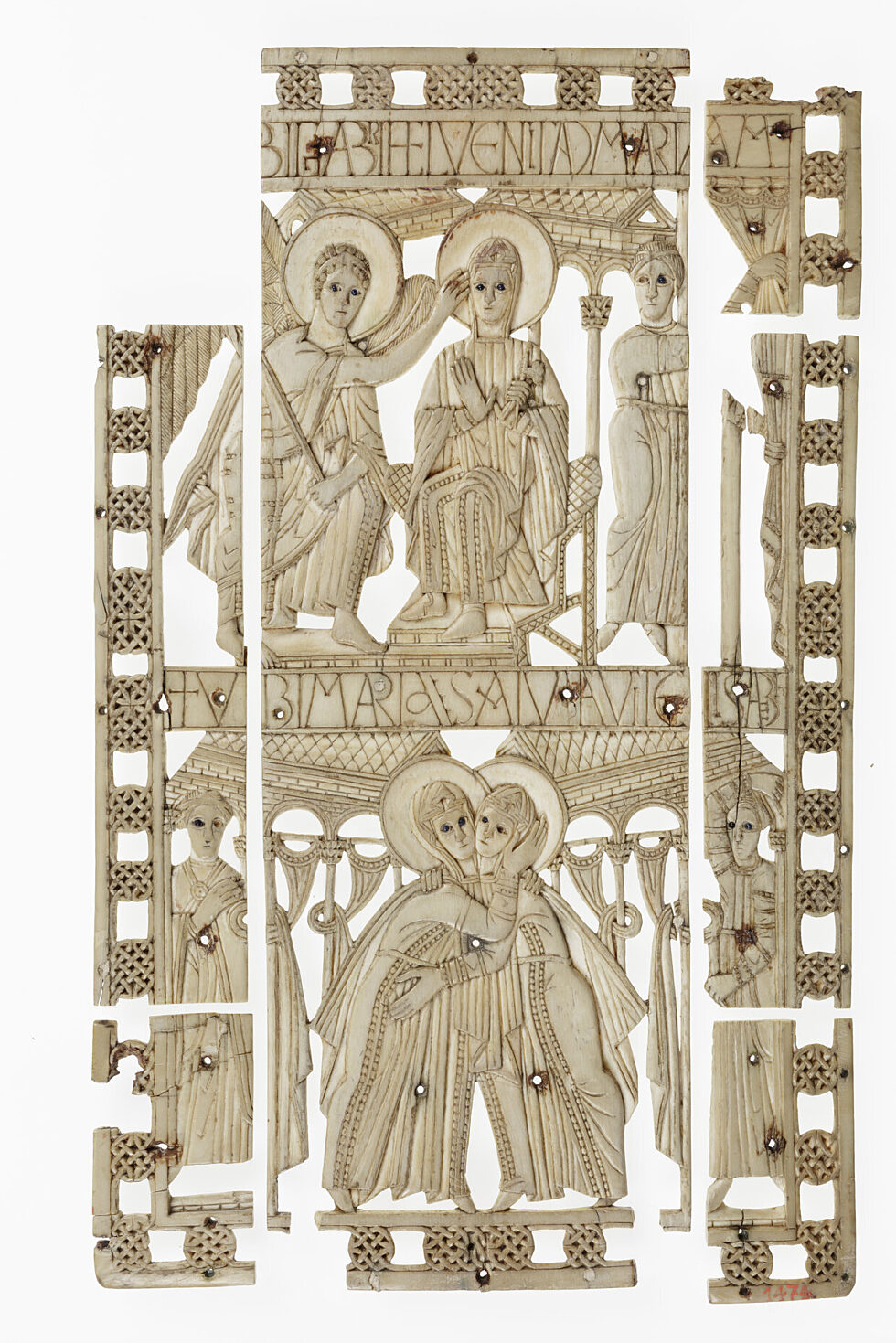
At the heart of the CARVES project is an ivory object that has lived several lives. It started, simply enough, as an elephant tusk, or actually rather several tusks. After the hunt, the ivory was carved into Roman consular diptychs, ceremonial writing tablets reserved for people of high status. Centuries later, around 800 AD, when ivory grew scarce due to overhunting and disrupted trade routes, several diptychs were cut and recombined: their fragments were reused to form both the front and back cover of a book, almost certainly a bible.
Recent research revealed that the book was restored in the 15th century in Maastricht. Eventually the book itself was discarded, but the ivory panels found a new place in the decoration of an altar in a small village church in Genoelselderen, Belgium. To pay for the renovation of the church, the ivories were sold, and began a new life at the Art & History Museums of Brussels. For the last hundred and fifty years, as a museum object, they have told and illustrated the history of our regions. Tusk, diptych, book cover, altarpiece, museum piece: five lives in one small piece of ivory.
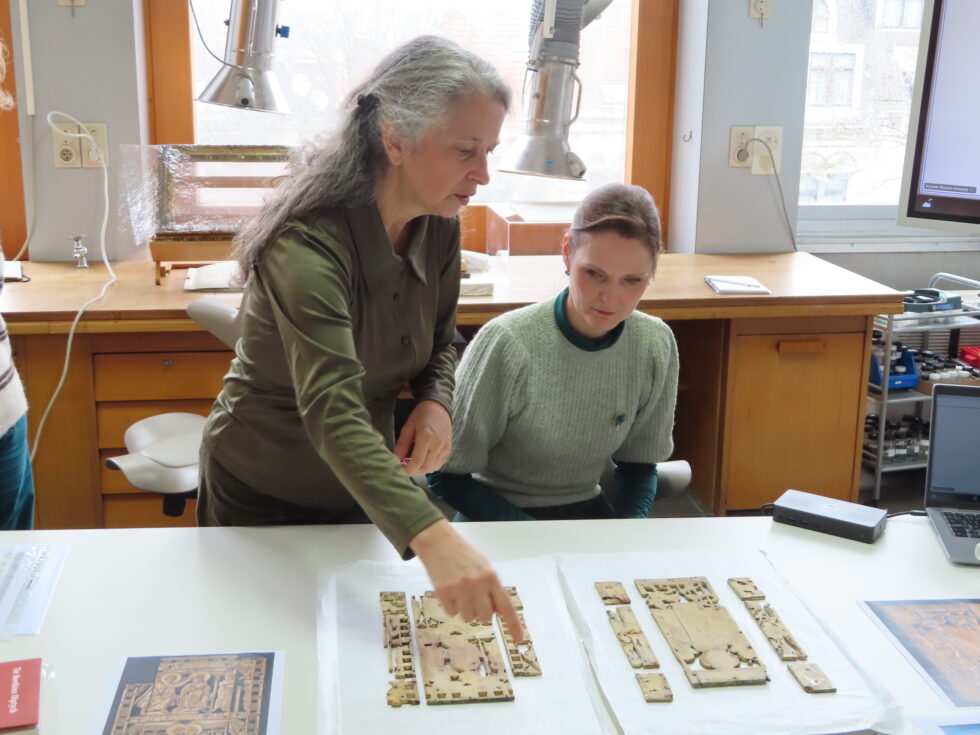
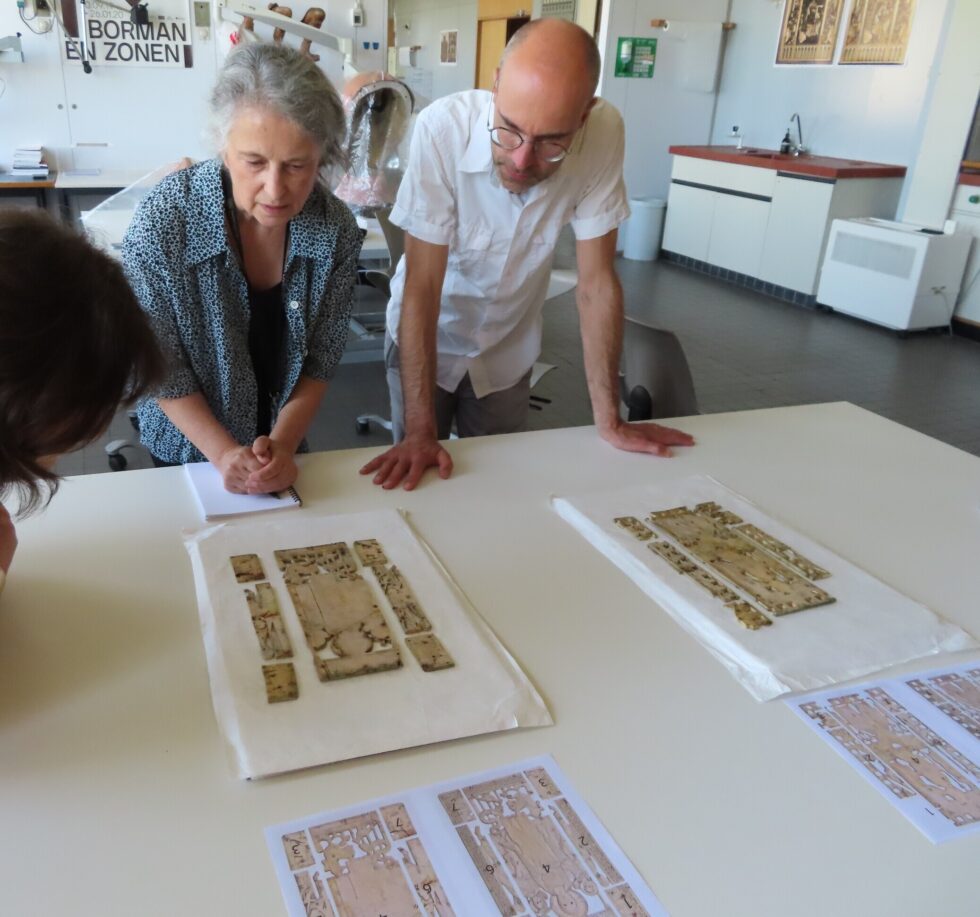
It's been a busy first half year for CARVES. We carried out XRF and MA-XRF measurements to determine the composition of the glass eyes and to decipher a worn text. We studied archives and looked closely at tool marks on the ivory itself. Strontium mapping suggests the different fragments may share a common tusk of origin.
There's more on the horizon, including the sampling for the upcoming DNA and isotope analysis by RBINS and VUB. We're also looking forward to a team visit to the parish of Genoelselderen, where the object once had its place on the altar, and a look at a similar ivory bound evangeliarium in Tongeren.

Project partners


More KIK-IRPA news

European exercise tests international cooperation in safeguarding cultural heritage
Ten years ago, it would have been difficult to imagine a European exercise focused on the protection of cultural heritage involving specialised teams from the European Union in the context of a disaster exceeding national response capacities.

Four leading institutions of the Cinquantenaire Park join forces for the future
The four major institutions located in the Cinquantenaire Park – Autoworld Museum Brussels, the Royal Institute for Cultural Heritage (KIK-IRPA), the Royal Museums of Art and History (KMKG-MRAH) and the War Heritage Institute (WHI) – have signed a declaration of intent to structurally strengthen their collaboration.